A custom eyewear sample can look excellent. The frame shape is correct, the acetate color matches the design direction, the hinges feel smooth, and the overall finish meets the brand’s expectations. After approval, however, the factory still needs to reproduce those characteristics across a full production run.
This is where sample approval and bulk production become two different challenges. A sample represents a limited number of finished units. Mass production involves repeated material preparation, machining, assembly, finishing, and inspection. Small variations at any of these stages can affect the appearance, dimensions, or function of the finished frames.
For eyewear brands developing custom collections, the goal should not simply be to produce one good sample. It should be to establish a repeatable process that keeps bulk products aligned with the approved design and agreed specifications.
1. Material Batches Can Affect the Final Appearance
Material consistency is one of the first factors to consider when comparing an approved sample with bulk production. This is particularly relevant to acetate eyewear, where the visual character of the material may include translucent areas, layered colors, or tortoiseshell patterns.
Two acetate sheets can share the same general color description without having exactly the same pattern distribution or visual depth. Differences in raw material batches may therefore become noticeable when a large number of frames are produced.
Other materials introduce different considerations. Metal frames depend on the specified alloy, surface preparation, and finishing process. Titanium components may require particular attention to joining and surface treatment. For mixed-material designs, the appearance of each component also needs to work with the others.
To reduce unnecessary variation, buyers and manufacturers should confirm the intended material, color reference, finish, and acceptable visual range before production begins.
For projects involving custom eyewear OEM/ODM development, these details should be documented as part of the product requirements rather than left to a general instruction such as “match the sample.”
2. Processing Conditions Must Be Repeatable
An approved frame is the result of several manufacturing operations, not just the original design. Cutting, shaping, edge finishing, polishing, drilling, and assembly all contribute to the final result. Depending on the frame construction, a change in one operation may influence the next.
For acetate frames, inconsistent shaping or finishing can affect edge definition, surface appearance, and the way the frame front meets the temples. For metal frames, forming and joining operations influence geometry and alignment. Designs that combine different materials may require additional attention to the interfaces between components.
The solution is not to assume that every machine setting must remain identical under all circumstances. Instead, production parameters should be appropriate for the material and construction, documented where necessary, and checked to confirm that the resulting components remain within the agreed specifications.
When a process is adjusted during production, the factory should also consider whether the change affects other operations or the appearance of completed frames.
3. Dimensional Accuracy Matters Across the Full Batch
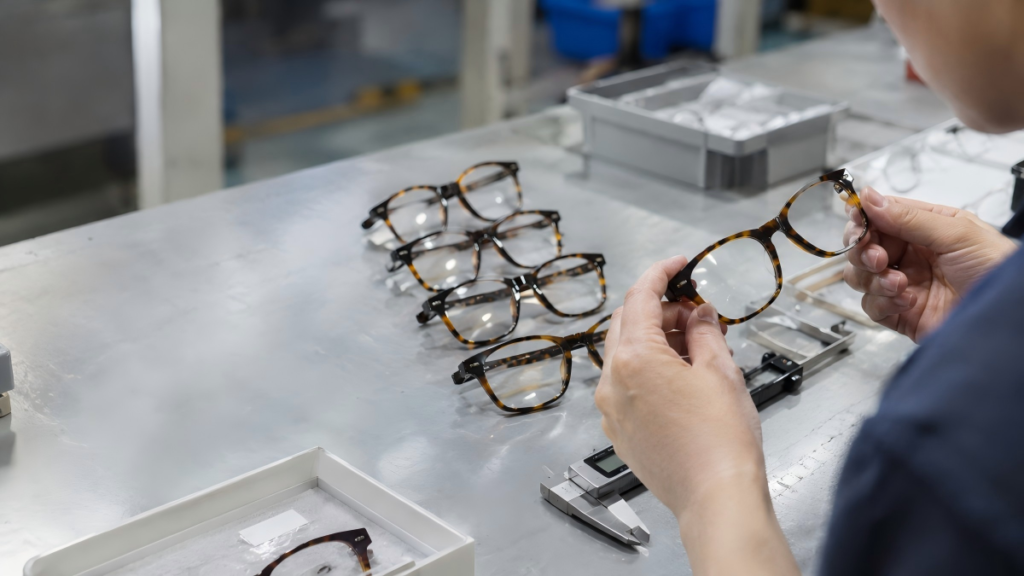
A frame may look correct at first glance while still differing from the approved sample in dimensions or alignment. These differences can influence lens fitting, wearing comfort, symmetry, and the way the temples sit when the frame is placed on a flat surface.
Depending on the design, relevant checkpoints may include:
- Overall frame width and lens opening dimensions.
- Bridge dimensions and the relationship between the two rims.
- Temple length and the position of the hinge.
- Left-to-right alignment and symmetry.
- Temple opening, closing, and general assembly condition.
- Fit between the frame, lenses, and other specified components.
Not every dimension requires the same level of attention. Critical dimensions and acceptable tolerances should be identified according to the design, function, and agreed product specifications. A single universal tolerance is not appropriate for every frame construction.
Measurement records can help the production and quality teams identify whether a difference is isolated or part of a wider pattern. They also provide a clearer basis for discussing corrective action with the buyer.
4. Surface Finishing Needs Consistent Evaluation
Surface finishing has a direct influence on how customers perceive an eyewear product. Differences in polishing, edge smoothness, coating appearance, or the visibility of machining marks may become more apparent when several units are compared side by side.
For acetate frames, inspection may focus on the clarity and consistency of polished surfaces, edge transitions, and the appearance of the material pattern. For metal frames, relevant checks may include the uniformity of the specified finish and visible imperfections around formed or joined areas.
Brands should define the appearance they expect through an approved reference sample, suitable images, and written criteria where needed. These references should distinguish acceptable natural material variation from defects that require correction.
Without a shared standard, a manufacturer and a buyer may interpret terms such as “high gloss,” “smooth finish,” or “premium appearance” differently. Clear examples and agreed inspection criteria make those expectations easier to apply consistently.
5. Assembly Can Introduce Unit-to-Unit Differences
Even when frame fronts and temples have been produced correctly, assembly can influence the final product. Hinge alignment, screw installation, temple movement, and the relationship between assembled components all affect the finished frame.
Potential issues include uneven temple spread, inconsistent opening resistance, loose connections, visible alignment differences, or components that do not sit as intended. The relevance of each check depends on the design and the hardware used.
Assembly requirements should therefore be included in the quality plan, not treated as an informal final adjustment. If a design uses a specialized hinge or a complex temple connection, the factory should pay particular attention to the corresponding assembly points.
For buyers developing a new collection, it is useful to confirm which functional characteristics will be checked during production and how any deviations will be recorded.
6. A Better Control Plan Connects the Sample to Bulk Production
Sample approval becomes more effective when it is connected to a documented production standard. The approved sample shows the intended result, while specifications and inspection criteria help the factory reproduce and evaluate that result throughout the order.
A practical approach can include the following stages:
- Confirm the product requirements. Record the agreed materials, colors, dimensions, construction details, branding, and finish.
- Retain an approved reference sample. Keep the correct sample available for comparison and identify the approved version clearly.
- Review production readiness. Confirm that materials, components, tooling, and processing methods are appropriate for the approved design.
- Check initial production output. Compare early production units with the approved reference before the full run proceeds without review.
- Inspect during production. Check relevant dimensions, assembly features, and surface characteristics at suitable stages.
- Conduct final inspection. Evaluate the finished products against the agreed requirements and record any discrepancies.
The appropriate inspection frequency depends on the product, production process, order requirements, and identified risks. The purpose is to catch variation early enough for it to be investigated and corrected, rather than discovering every issue only after the order is complete.
7. What Buyers Should Confirm Before Approving Bulk Production
Eyewear brands can make sample approval more useful by asking a few practical questions before authorizing mass production:
- Will bulk production use the agreed material and specified finish?
- Have the important dimensions and acceptable tolerances been documented?
- Are the hinge, temple, and other assembly requirements clearly defined?
- Which features will be checked during production and final inspection?
- How will material variation and appearance-related acceptance criteria be handled?
- What is the process for reporting and resolving a production deviation?
These questions do not eliminate every possible variation. They help both parties establish a shared understanding of the product and how its quality will be evaluated.
For a fully customized project, design details and manufacturing requirements should be discussed before the production schedule is finalized. You can learn more about Mellume’s OEM/ODM capabilities and the development considerations involved in bringing a custom eyewear design into production.
Frequently Asked Questions
Does an approved eyewear sample guarantee that every bulk unit will be identical?
No. An approved sample establishes the intended product standard, but bulk production introduces repeated operations and material variation. A documented specification and suitable inspection plan help the manufacturer maintain consistency across the order.
Which factors are most likely to cause differences between samples and bulk eyewear?
Relevant factors include material batch variation, processing conditions, dimensional control, surface finishing, assembly, and inspection methods. The most important risks depend on the material and construction of the particular frame.
Should buyers request a production sample before the full order is completed?
For projects where appearance, construction, or process repeatability presents a meaningful risk, reviewing initial production output can help confirm that the manufacturing setup matches the approved requirements. The timing and approval process should be agreed with the supplier before production begins.
How can brands communicate quality expectations more clearly?
Provide an approved physical reference where practical, written product specifications, relevant measurements, color references, and clear descriptions or examples of acceptable and unacceptable conditions. Record agreed changes so that the production team works from the correct product version.
Conclusion
A good eyewear sample is an important milestone, but consistent bulk production requires more than reproducing its appearance once. Material selection, processing conditions, dimensional accuracy, surface finishing, assembly, and inspection all contribute to the final result.
For custom eyewear brands, the most effective approach is to connect sample approval with clear specifications and repeatable production checks. This gives both the buyer and manufacturer a more practical basis for evaluating consistency, identifying differences, and resolving issues before they affect the finished order.
Developing a custom eyewear collection? Discuss your design requirements, materials, and production expectations with Mellume to establish a clear starting point for your OEM/ODM project.