Choosing a frame material is one of the earliest decisions in custom eyewear development. Acetate, metal, and hybrid construction can all produce distinctive eyewear, but each creates different requirements for frame geometry, component design, finishing, assembly, and quality control.
The right choice depends on more than appearance. A thick acetate frame, a lightweight titanium optical frame, and a hybrid design combining acetate with metal components require different approaches to engineering and manufacturing.
For eyewear brands developing a new collection, understanding these differences helps align the product concept with the intended wearing experience and practical production requirements.
1. Acetate Eyewear: Best for Sculpted Shapes and Color Expression
Acetate is widely used for optical frames and sunglasses that rely on substantial profiles, distinctive colors, or visible material patterns. Its characteristics make it suitable for designs ranging from classic rectangular frames to oversized silhouettes and sculpted fashion styles.
Design flexibility
Acetate can be machined into different rim profiles, bevels, temple shapes, and decorative contours. Transparent colors, solid tones, tortoiseshell patterns, and layered visual effects offer designers considerable freedom when developing a collection’s appearance.
Material thickness also influences the finished design. A thick front can create a bold silhouette, while a slimmer profile can produce a more understated look. The selected dimensions must still accommodate the lens groove, hinge attachment, and other structural requirements.
Manufacturing considerations
Acetate frame production typically involves cutting and machining the frame components, refining their contours, installing hardware, polishing surfaces, and assembling the finished product. The exact process depends on the design and the manufacturer’s production methods.
Complex bevels, narrow sections, deep recesses, and sculpted temples can require additional attention during machining and finishing. Patterned material also needs to be evaluated for color distribution and the visual relationship between the front and temples.
For brands that want expressive colors, substantial frame profiles, or carefully developed surface contours, acetate can be a suitable starting point.
2. Metal Eyewear: Best for Slim Profiles and Component-Based Designs
Metal frames are often selected for designs that require slender rims, narrow temples, adjustable nose-pad assemblies, or a more restrained visual profile. However, metal is not a single material category. Stainless steel, titanium, and other alloys differ in their properties, processing requirements, and suitable applications.
Design and structural characteristics
Metal construction can support relatively slim components, but the appropriate dimensions depend on the selected alloy, frame geometry, joining method, and intended use.
Rim shape, bridge construction, nose-pad arms, endpieces, and temple connections all influence the final structure. In designs with multiple joined components, the positions of those connections must be coordinated with the overall frame geometry.
Manufacturing considerations
Depending on the design and material, metal frame production may involve forming, cutting, welding or soldering, surface preparation, plating or other surface treatments, component assembly, and final adjustment.
Joining methods need to suit the material and the particular connection. Heat-sensitive areas, fine components, and visible joints may require careful process control to achieve the intended appearance and structural performance.
Surface finishing is another important consideration. Color, gloss, coating consistency, and the appearance of joined areas can influence how the finished frame is perceived.
Metal construction is worth considering when a design calls for slim proportions, a defined metal structure, or specific features such as adjustable nose pads. The exact material and construction should be selected according to the product requirements rather than appearance alone.
3. Hybrid Eyewear: Combining Different Materials in One Frame
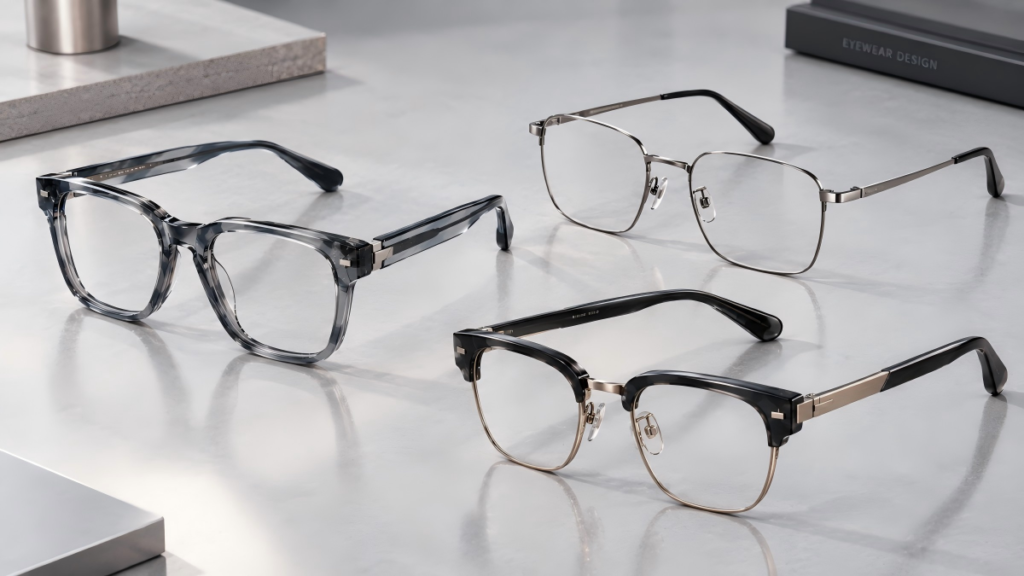
Hybrid eyewear combines materials or construction methods within the same frame. Examples include acetate fronts with metal temples, metal structures with acetate temple covers, or designs that use different materials for decorative and functional components.
This approach allows designers to combine the visual depth of acetate with the slim appearance or structural characteristics of metal. It can also create a distinctive product identity through contrasting textures, colors, and finishes.
Why hybrid designs need additional coordination
The main challenge is not simply using two materials. It is ensuring that the components fit together correctly and can be manufactured and finished in a compatible sequence.
For example, an acetate front connected to metal temples requires a hinge arrangement that suits both the front-frame geometry and the metal component. If the design includes decorative metal inserts, their position and interface with the surrounding acetate must also be considered.
Different materials may require different machining and finishing operations. The production sequence should therefore account for component access, assembly order, surface protection, and the appearance of the transitions between materials.
Before approving a hybrid design, the development team should review:
- The connection method between the materials.
- The dimensions and positioning of mating components.
- The accessibility of fixing points during assembly.
- The compatibility of finishing processes.
- The appearance of visible material boundaries.
- The inspection requirements for each component and the assembled frame.
Hybrid construction can create valuable design possibilities, but it benefits from early engineering review rather than treating each material as an independent part.
4. Comparing Acetate, Metal, and Hybrid Construction
The following comparison provides a general starting point for material selection. Actual performance depends on the specific material grade, component design, dimensions, processing methods, and finished product requirements.
| Consideration | Acetate | Metal | Hybrid |
|---|---|---|---|
| Typical design direction | Bold profiles, color, and sculpted contours | Slim structures and fine component details | Contrasting materials and combined design features |
| Visual options | Solid colors, transparency, and patterned effects | Metal finishes, colors, and refined surface details | Combination of different colors, textures, and finishes |
| Key manufacturing focus | Machining, contouring, polishing, and hinge installation | Forming, joining, surface treatment, and alignment | Material interfaces, assembly sequence, and finish compatibility |
| Important design checks | Material thickness, lens groove, and sculpted profiles | Component geometry, joined areas, and nose-pad structure where applicable | Connection geometry, component fit, and visible transitions |
| Common development challenge | Balancing appearance with remaining material and finishing requirements | Coordinating fine components and consistent surface appearance | Ensuring different materials work together as one assembled product |
This comparison should not be treated as a universal ranking. For example, a metal frame is not automatically lighter than an acetate frame, and a hybrid frame is not necessarily more durable or more difficult to manufacture in every case. The outcome depends on the complete design.
5. How Material Choice Affects Weight and Wearing Comfort
Weight is an important consideration in eyewear design, but the material name alone does not determine how a frame feels when worn.
The finished weight depends on material density, component dimensions, lens size, frame geometry, and the amount of material used. Weight distribution also affects the wearing experience. A frame with a relatively heavy front may feel different from one that distributes more of its mass along the temples.
Acetate designs can use material removal and carefully shaped profiles to manage bulk. Metal designs can use different component dimensions and constructions to balance the frame. Hybrid designs require consideration of how the mass of the different components is distributed across the finished product.
When comfort is a priority, the development team should evaluate:
- The total weight of the assembled frame with its intended lenses.
- The distribution of weight between the front and temples.
- The bridge and nose-pad configuration.
- The temple shape and its contact around the ears.
- The relationship between frame dimensions and the intended wearer.
Where possible, these considerations should be evaluated using a physical prototype. A digital design can help assess proportions, but it cannot fully demonstrate how the finished frame feels during wear.
6. How to Select Materials for Different Eyewear Concepts
Material selection should begin with the product concept and its requirements, rather than assuming that one material is suitable for every collection.
For bold fashion sunglasses
Acetate may be a strong candidate when the design depends on substantial rims, expressive color patterns, or sculpted temples. The development review should focus on proportions, lens fitting, finishing, and the material available around structural features.
For slim optical frames
Metal may be worth considering when the design calls for narrow components, a fine visual profile, or adjustable nose-pad assemblies. The specific alloy and joining method should be selected according to the frame geometry and performance requirements.
For distinctive premium collections
Hybrid construction may be appropriate when the design benefits from combining the visual characteristics of different materials. The key is to define how the components connect and how the completed frame will be machined, finished, and assembled.
For collections with specific performance requirements
Material selection should be based on the actual requirements of the product. If the project prioritizes low weight, flexibility, corrosion resistance, particular surface finishes, or specific wearing characteristics, the manufacturer should assess the relevant material grades and construction options rather than relying on broad category labels.
7. Questions to Discuss with Your Eyewear Manufacturer
Before finalizing the material for a custom eyewear project, brands should discuss the intended design and its manufacturing implications with the factory.
- Which material and construction best suit the intended frame geometry?
- What are the main manufacturing constraints associated with the selected design?
- How will the lens, hinge, bridge, and temple components be integrated?
- Which surface finishes and color references need to be specified?
- Are there areas that require particular attention during prototype evaluation?
- Which dimensions, appearance requirements, and functional checks should be included in the technical specification?
These questions help connect material selection with the rest of the product development process. They also make it easier to identify design changes that may be needed before tooling and production arrangements are finalized.
For more information about custom frame development, visit our eyewear OEM/ODM capabilities page.
Frequently Asked Questions
Is acetate better than metal for sunglasses?
Neither material is universally better. Acetate is often chosen for its color options and sculpted profiles, while metal can support slim component-based designs. The appropriate choice depends on the intended appearance, construction, fit, and product requirements.
Are metal frames always lighter than acetate frames?
No. Weight depends on the material grade, dimensions, geometry, and component construction. A comparison should use the actual frame designs rather than general assumptions about material categories.
Is hybrid eyewear harder to manufacture?
Hybrid construction introduces additional interfaces and may require coordination between different processing and finishing methods. Its actual manufacturing complexity depends on the design, component connections, and production sequence.
When should a brand finalize the frame material?
The material should be evaluated during design development, before the construction and production approach are finalized. Prototype review can help confirm whether the material, frame geometry, and intended wearing characteristics work together as expected.
Choosing the Right Construction for Custom Eyewear
Acetate, metal, and hybrid construction each offer different possibilities for custom eyewear. The best choice is the one that supports the intended design while meeting the project’s requirements for fit, appearance, component integration, finishing, and manufacturing consistency.
At Shenzhen Mellume Technology Co., Ltd., custom eyewear development involves coordinating material selection with frame geometry, component construction, machining, surface finishing, assembly, and quality inspection.
If you are developing a new eyewear collection, our team can review your design references and discuss suitable material and construction options as part of an OEM/ODM project.
Explore our custom eyewear development capabilities to learn more about our manufacturing process.